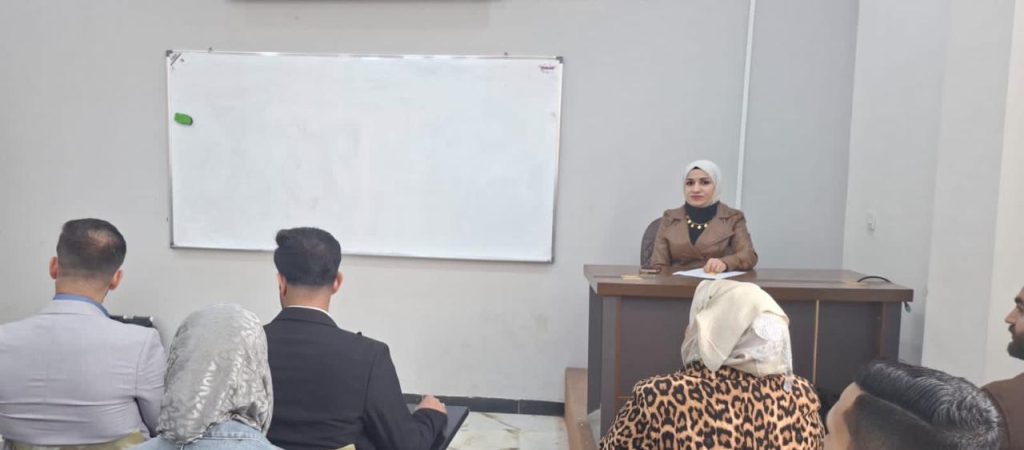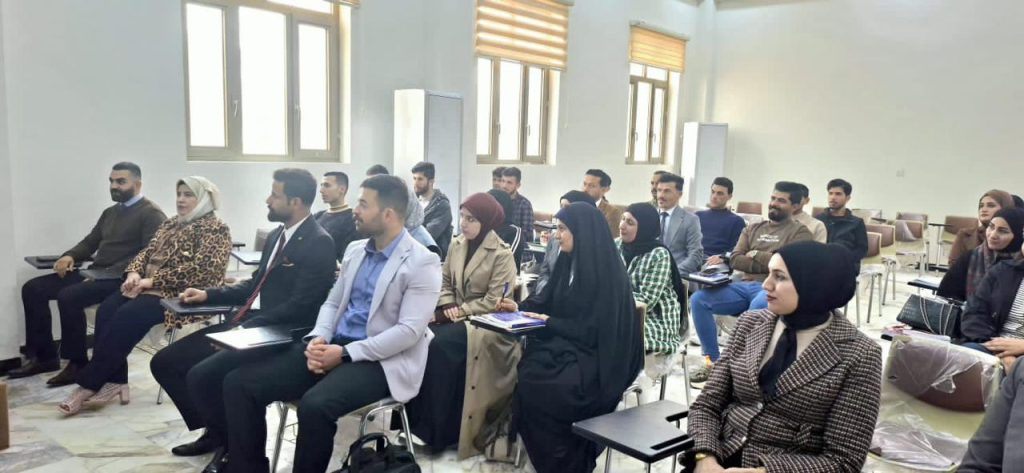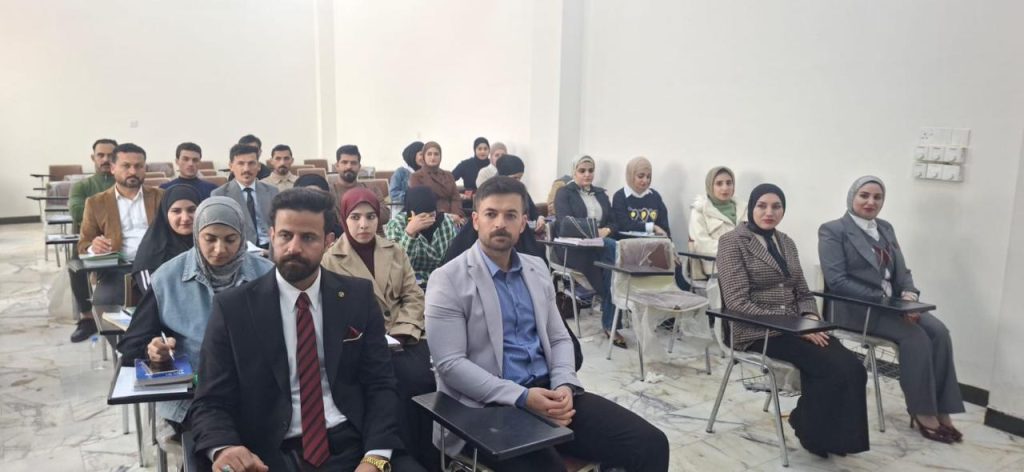

In implementation of the Memoranda of Understanding between Diyala University and Iranian universities, the College of Education for Humanities held an online seminar on Andalusian literature and its influence on European literature.
Under the patronage of the President of Diyala University, Professor Dr. Tahseen Hussein Mubarak, and the supervision of the Dean of the College of Education for Humanities, Professor Dr. Luay Sayhood Al-Tamimi, and in implementation of the Memoranda of Understanding between Diyala University and Iranian universities, the College held an online academic seminar on Andalusian literature and its influence on European literature, focusing on literary evidence from Orientalist perspectives.The seminar, whose topics were discussed by the Dean of the College, Professor Dr. Luay Sayhood Al-Tamimi, Assistant Lecturer Zainab Qutaiba Abdul Ali, and Professor Dr. Ali Baqir Tahernia from the University of Tehran, clarified that Andalusia was not merely a geographical location, but a cultural incubator that carried the torch of enlightenment to Europe during its Dark Ages. It also addressed the art of muwashshahat and zajal, and how their rhythms were transmitted to the songs of the troubadour in southern France. Furthermore, it examined the literature of chivalry and platonic love, whose foundations were laid by Andalusian poets and later adopted by European poets in the Middle Ages.The symposium highlighted the role of Orientalists who traced this influence and who emerged at that time, such as Sigrid Hunke in her book “The Arabs Shine on the West,” in which she documented the contribution of Arabic literature to the European Renaissance, and Ivan García Márquez, who demonstrated that modern European poetry owes its meters and rhymes to the Andalusian heritage. The symposium also sought to discuss the implications of Orientalist attempts to link the creative Arab mind with the receptive European spirit, and how fair-minded Orientalism contributed to highlighting the Arab identity of early Spanish literature. It recommended the need to deepen comparative studies between Arabic and Western literatures, as well as encouraging young researchers to explore Andalusian manuscripts, which still hold many secrets of mutual cultural influence. This symposium aligns with Sustainable Development Goal 10, which aims to reduce inequalities within and among countries, and Goal 17, which focuses on partnerships for the goals, emphasizing the importance of strengthening the means of implementation and revitalizing the global partnership for sustainable development.