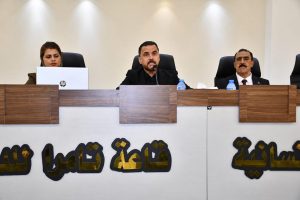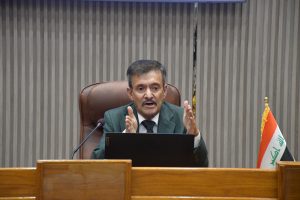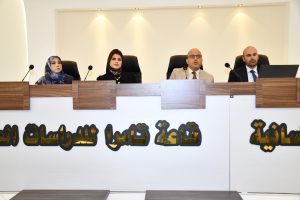
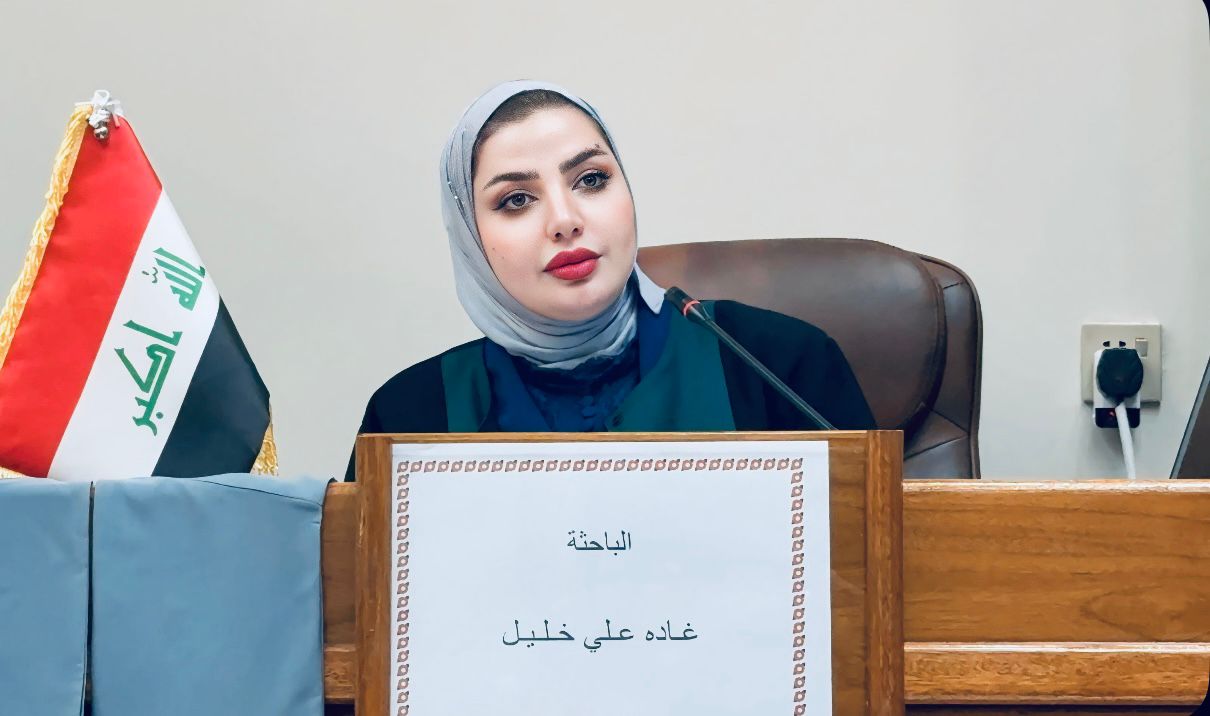
College of Education for Humanities Discusses the Effectiveness of Two Guidance Approaches: Multimodal Therapy and Storytelling in Reducing Dyslexia in Children with Autism
The College of Education for Humanities at Diyala University discussed a doctoral dissertation in Educational and Psychological Sciences, specializing in Psychological Counseling and Educational Guidance, entitled “The Effectiveness of Two Guidance Approaches: Multimodal Therapy and Storytelling in Reducing Dyslexia in Children with Autism.”The study, presented by student Ghada Ali Khalil and supervised by Professor Dr. Salem Nouri Sadiq, aimed to investigate the effectiveness of multimodal therapy and storytelling in reducing dyslexia levels among children on the autism spectrum.The study revealed statistically significant differences between the pre-test and post-test scores of the first experimental group, indicating greater effectiveness of multimodal therapy, with the post-test showing higher results. This can be explained by the program’s reliance on a multimodal therapy approach, which utilizes multiple techniques in a single session, such as symbolic modeling, assertiveness training, and positive reinforcement. This diversity helped children acquire new skills in different ways, making the learning process more enjoyable and effective. Regarding the effectiveness of storytelling, the results of the second experimental group showed statistically significant differences in favor of the post-test. This indicates that storytelling was effective in reducing dyslexia symptoms in children with autism spectrum disorder. This can be explained by the fact that stories, by their very nature, capture a child’s attention, allowing them to experience and interact with the events, thus increasing their motivation to learn and helping them improve their awareness of sounds and words. The study confirmed that guidance programs based on the integration of techniques (such as multimodal therapy) or on the use of narrative (such as storytelling) are effective in reducing dyslexia in children with autism spectrum disorder. The integration of cognitive, linguistic and emotional dimensions in guidance programs achieves a deeper effect than limiting oneself to a single method. Storytelling also represents an educational and therapeutic tool capable of activating joint attention and developing phonological awareness. Children with autism spectrum disorder and special cases need integrated guidance sessions. The lack of awareness and understanding of the slow developmental stages of children with autism spectrum disorder makes them suffer more than the child himself.