College of Education for Humanities Holds a Scientific Seminar on “Fatima al-Zahra (peace be upon her) in Poetic Memory: The Narrative of Absence and the Presence of the Symbol”
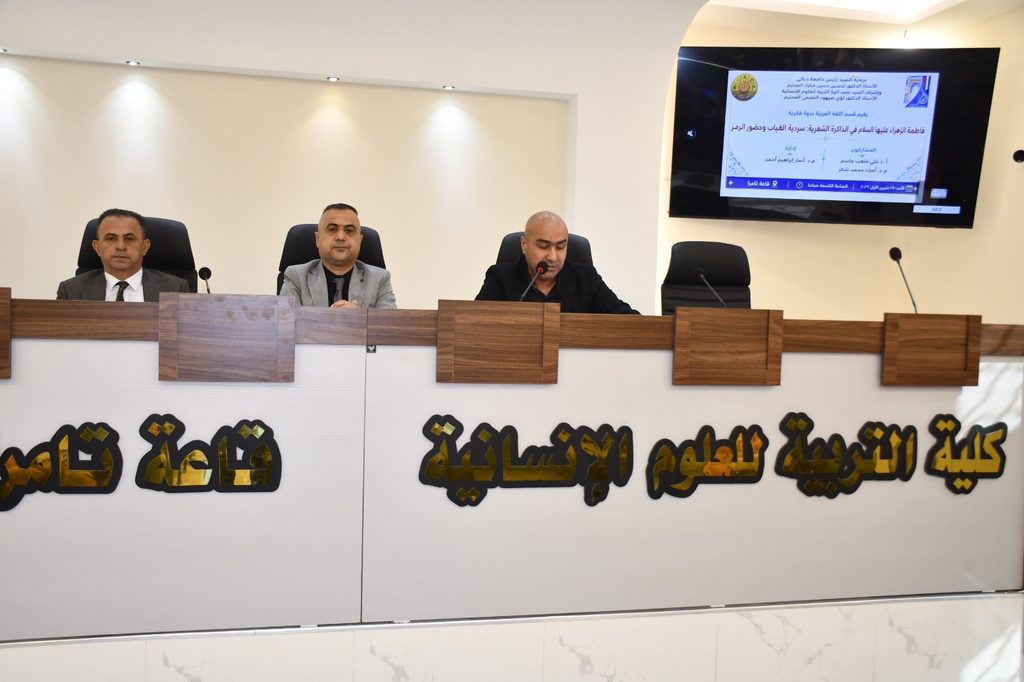
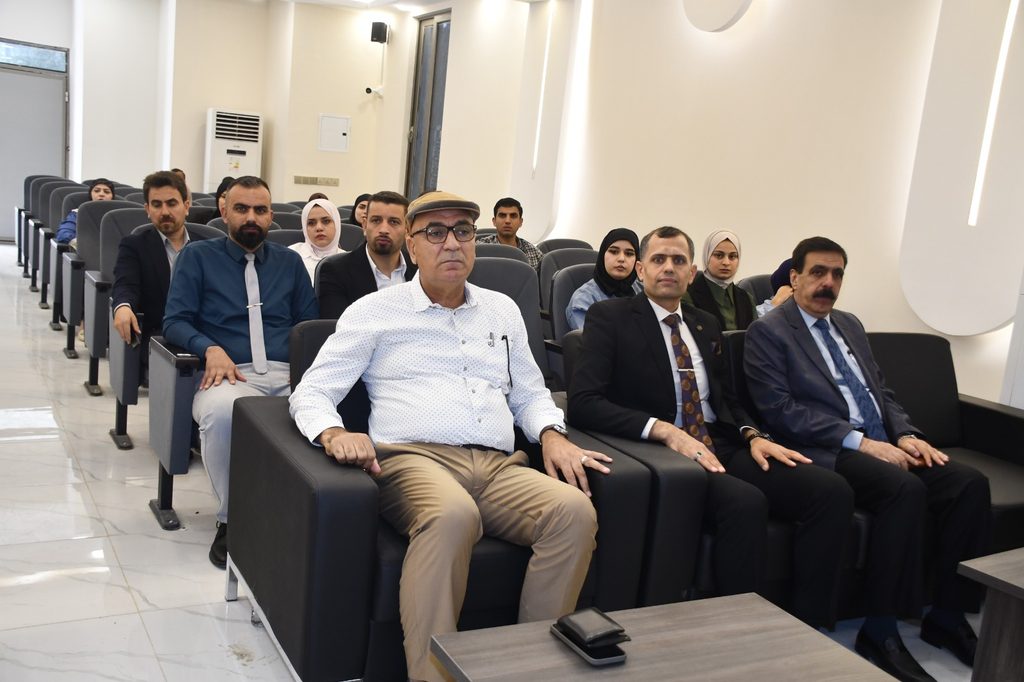
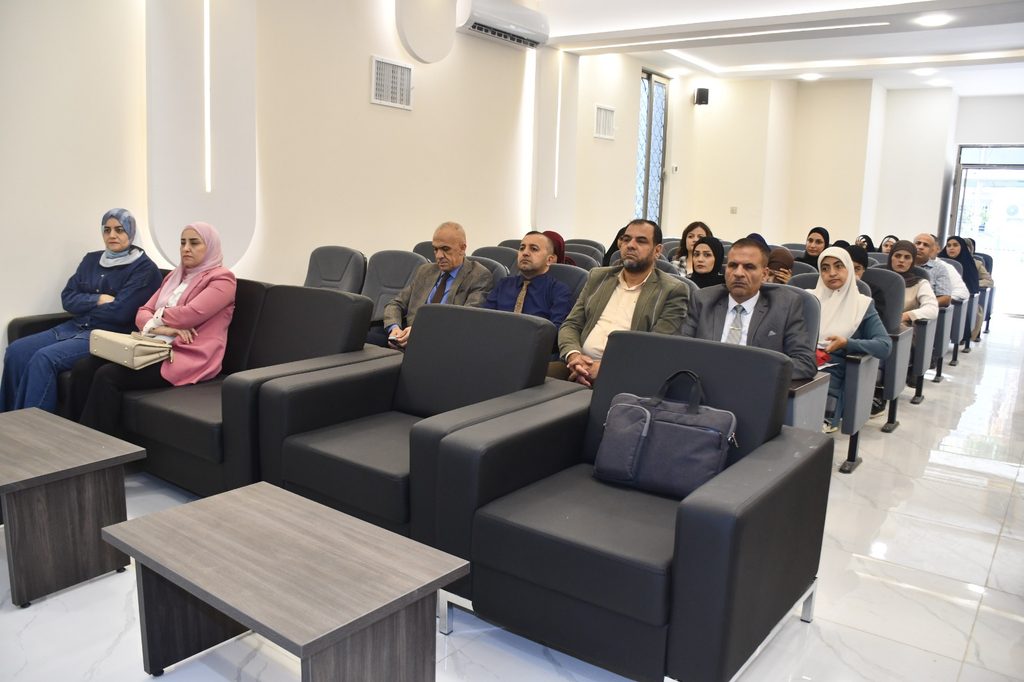
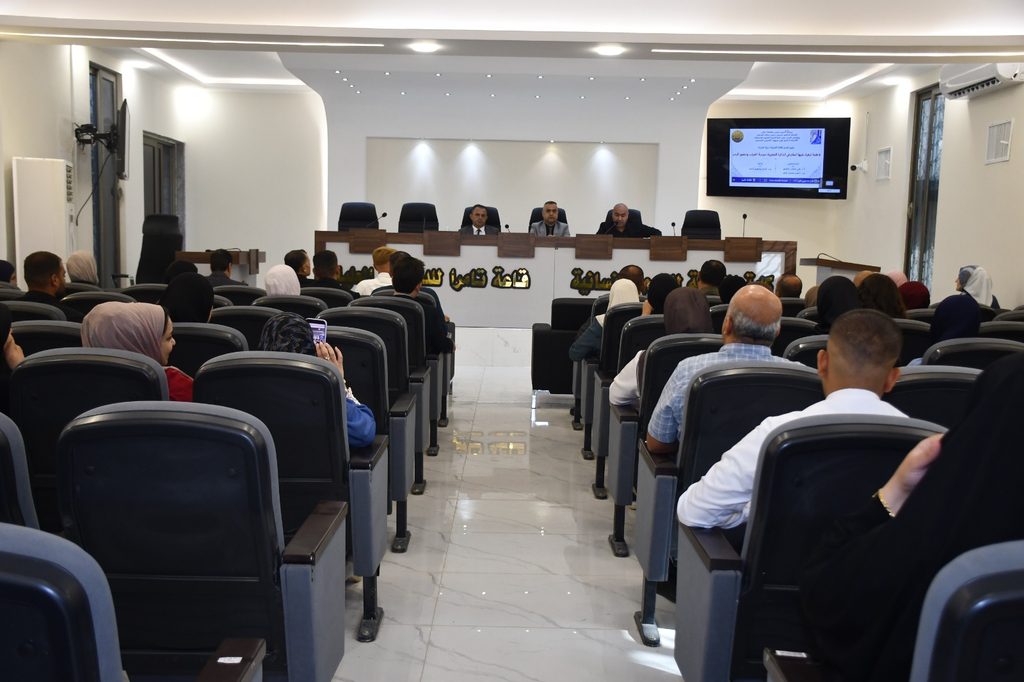
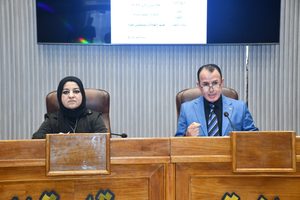
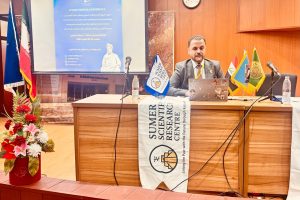
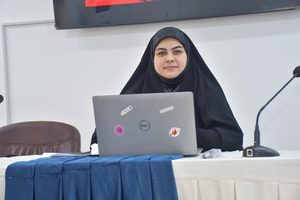
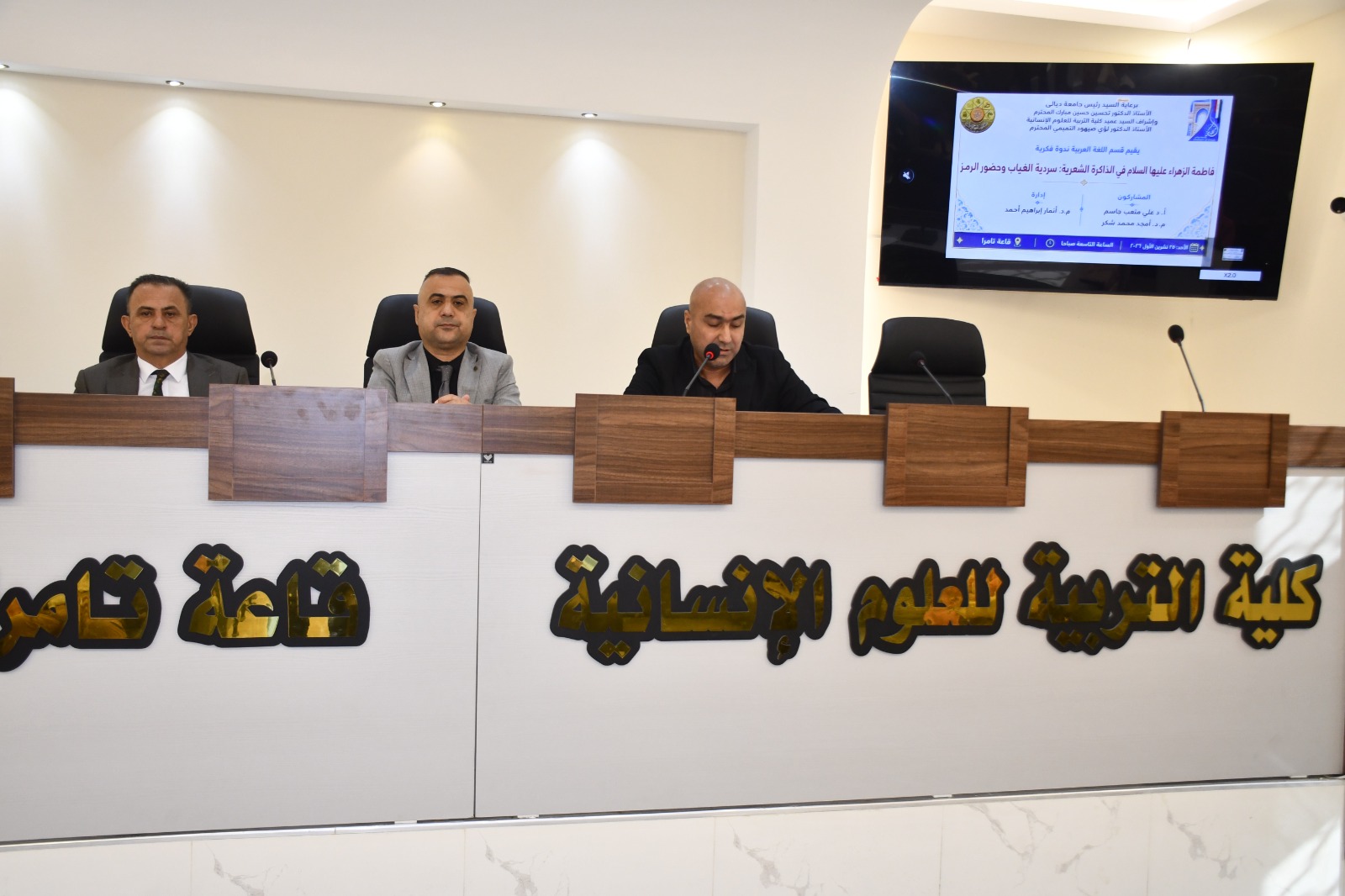
The Department of Arabic Language, in collaboration with the Women’s Affairs Unit at the College of Education for Humanities, University of Diyala, held a scientific seminar titled “Fatima al-Zahra (peace be upon her) in Poetic Memory: The Narrative of Absence and the Presence of the Symbol.”The seminar, featuring presentations by Professor Dr. Ali Mut’ib Jasim and Lecturer Dr. Amjad Mohammed Shukr, aimed to explore the presence of Lady Fatima al-Zahra (peace be upon her) within poetic memory. It examined how poets have invoked her life story and her spiritual and human stature, and how her absence has been transformed into a poetic narrative—one that transcends mere elegy to evoke a symbol rich with religious, historical, and emotional significance, embodying values such as purity, patience, justice, and loyalty.The seminar addressed the importance of poetry in preserving religious and cultural memory, as well as its role in reshaping symbolic figures within the collective consciousness. It further highlighted the capacity of poetry to transmute grief and absence into a renewed symbolic presence—reflecting the interplay between poetic experience and religious and historical heritage—while underscoring the status of Lady Fatima al-Zahra (peace be upon her) as a human and spiritual symbol that transcends the boundaries of time and space. The symposium recommended encouraging critical studies that examine the portrayal of Lady Fatimah al-Zahra (peace be upon her) in classical, modern, and contemporary Arabic poetry. It also emphasized the importance of analyzing the symbols and the artistic and aesthetic connotations within these poetic texts. Furthermore, it called for organizing seminars, cultural evenings, and poetry recitals that highlight the presence of religious figures in Arabic literature, while strengthening the role of poetry in preserving cultural and religious memory, documenting poetic texts, and making them accessible to researchers and students.This symposium aligns with the Sustainable Development Goals—specifically Goal 16: Peace, Justice, and Strong Institutions—by fostering awareness of human and ethical values and embedding a culture of justice and loyalty within society.