
The College of Education for Humanities Discusses the Arabic Novel and its Medical Representations: A Study in Light of Epistemological Criticism
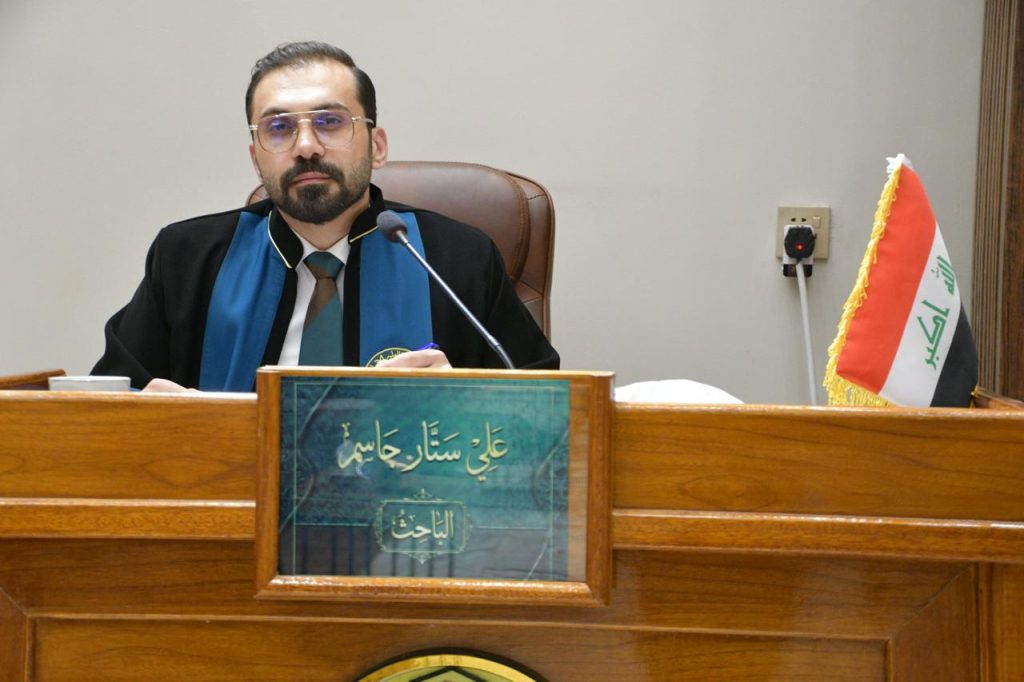
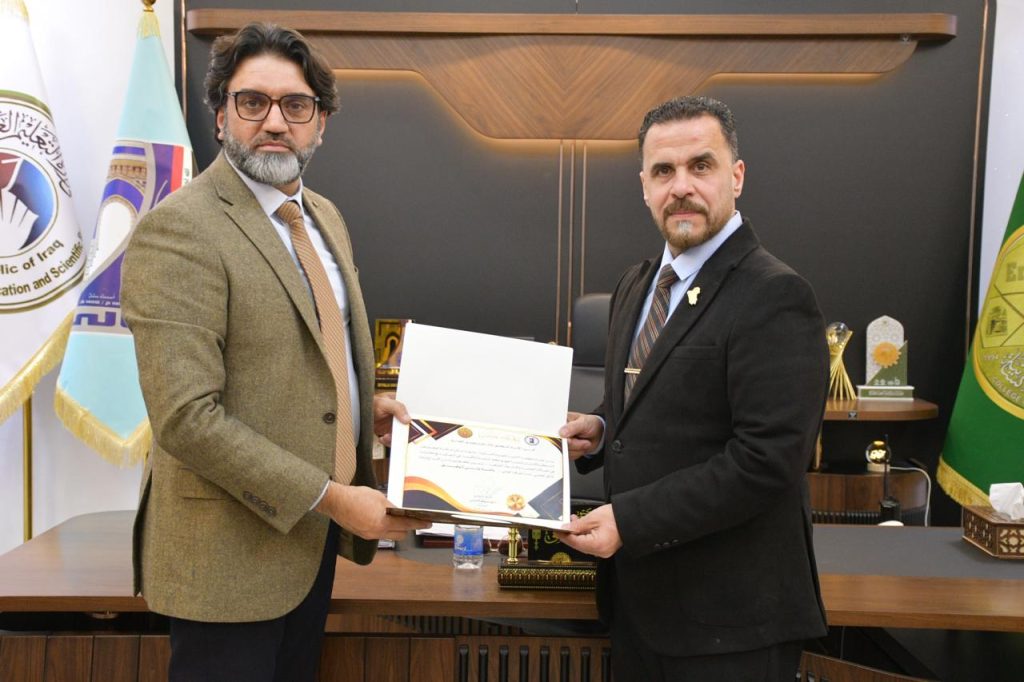
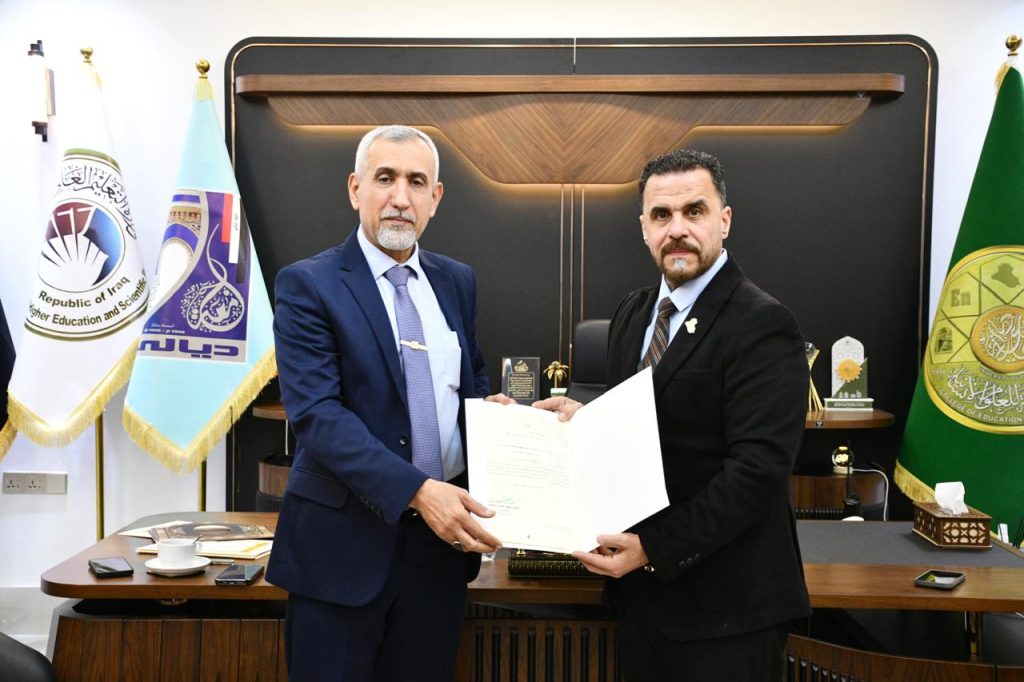
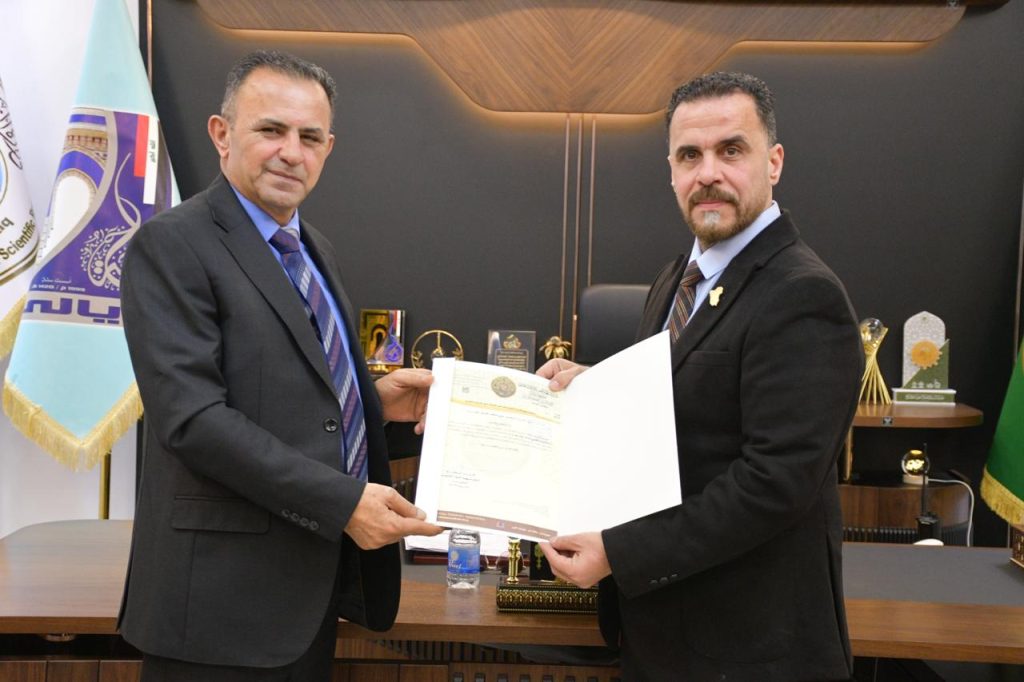
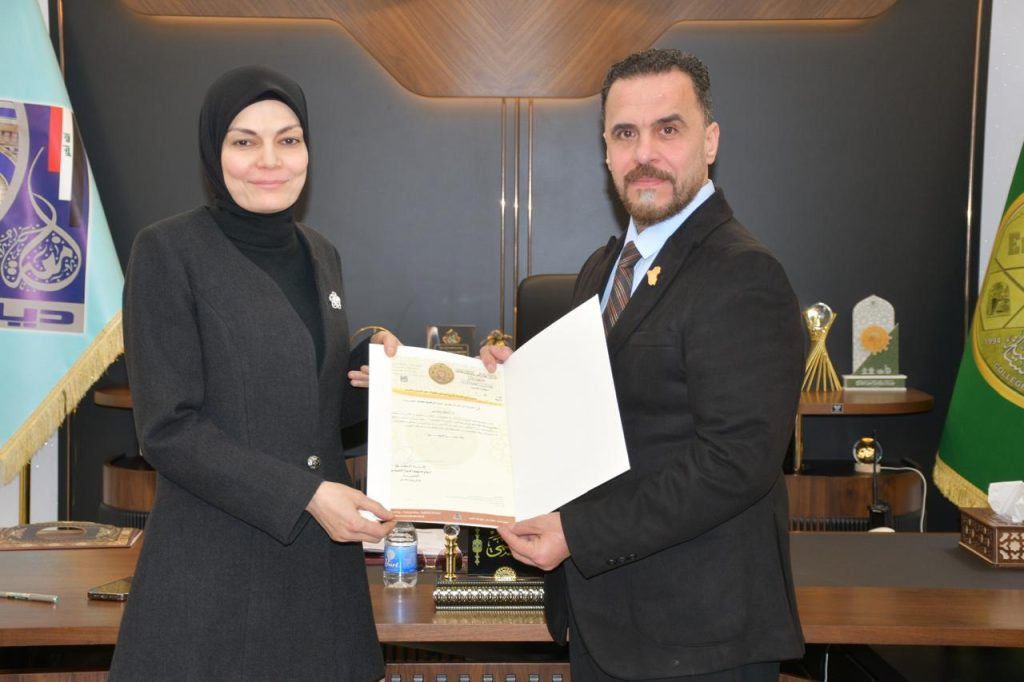
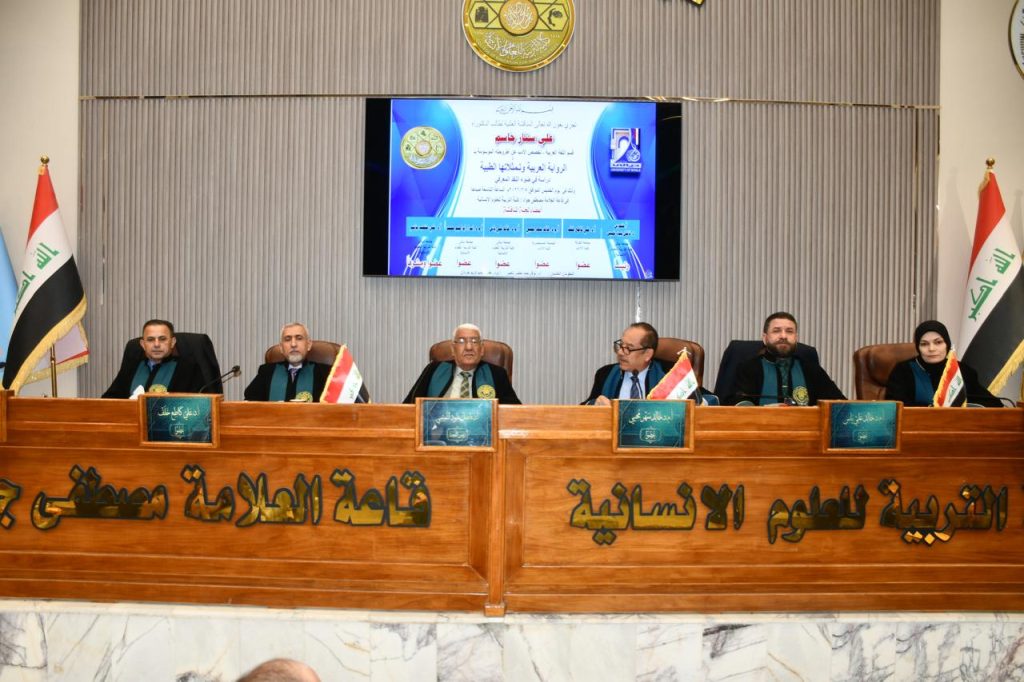
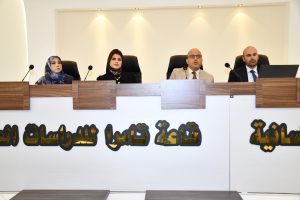
The College of Education for Humanities at Diyala University discussed a doctoral dissertation in Arabic Language, specializing in Literature, entitled “The Arabic Novel and its Medical Representations: A Study in Light of Epistemological Criticism.”The study, presented by student Ali Sattar Jassim and supervised by Professor Dr. Ali Mutab, aimed to move beyond superficial approaches to the presence of medicine in narrative fiction, seeking to understand the medical and epistemological value inherent in the novel in general, and the Arabic novel in particular. And how medicine, with its various branches, contributed to enriching and shaping narrative theory, and the contributions that the novel made to developing and enhancing medical practice.The study proved that the relationship between literature and medicine is not merely a superficial use of medical information in narrative fiction, but rather a profound dialectical relationship that contributes to the production of new knowledge. The novel does not merely reflect medical reality, but reshapes and critiques it. Moreover, through its imaginative potential, it offers human perspectives that the abstract language of clinical diagnosis cannot provide. The trajectory of medical realism in the Arabic novel, which began by imitating Western models, quickly shifted towards a local specificity that reflects the Arab health, social, and cultural reality. This is embodied in the character of the patient with all their suffering and human fragmentation, and in the character of the doctor with the conflict between scientific reason and social superstition. Furthermore, the relationship between medicine and narrative fiction is based on a rich structural overlap that has contributed to enriching each with the tools and techniques of the other. Medicine has provided narrative with the methodology of observation, diagnosis, and analysis, while narrative has given medicine its human and interpretive dimension. The study confirmed the therapeutic effectiveness of narrative fiction. On a psycho-behavioral level, the novel offers the reader (whether sick or healthy) an opportunity to understand the experience of illness and foster empathy. It also helps break the patient’s isolation by making them realize that their experience is shared. On a neurophysiological level, narrative opens promising avenues for understanding the impact of reading on stimulating brain regions responsible for regulating hormones related to mental and physical health, thus contributing to stress reduction and boosting the reader’s immunity.The study recommended expanding research in the field of narrative medicine and cognitive criticism through three main axes: analyzing narrative discourse in autobiographies and medical diaries to reveal the interaction between confession and diagnosis; transforming the personal experience of the doctor or patient into a narrative discourse that unites the subjective and professional dimensions; and studying travel literature in light of narrative medicine. This study explores how travel transforms into a diagnostic experience of self and world, while leveraging its findings to develop literary medical criticism. It recommends broadening the scope of cognitive criticism to form the foundation for a literary medical critique that integrates neuroscience and psychology methodologies with literary analysis tools, imagination, science and literature, and the human being and their body.This study aligns with Sustainable Development Goal 4, which focuses on quality education, aiming to ensure inclusive, equitable, and sustainable education for all.