The College of Education for Humanities Holds a Scientific Symposium on Arab Migrations to East Africa and Their Impact on Spreading Arab Culture
The College of Education for Humanities Holds a Scientific Symposium on Arab Migrations to East Africa and Their Impact on Spreading Arab Culture
كلية التربية للعلوم الإنسانية تعقد ندوة علمية حول الهجرات العربية إلى شرق إفريقيا وأثرها في نشر الثقافة العربية
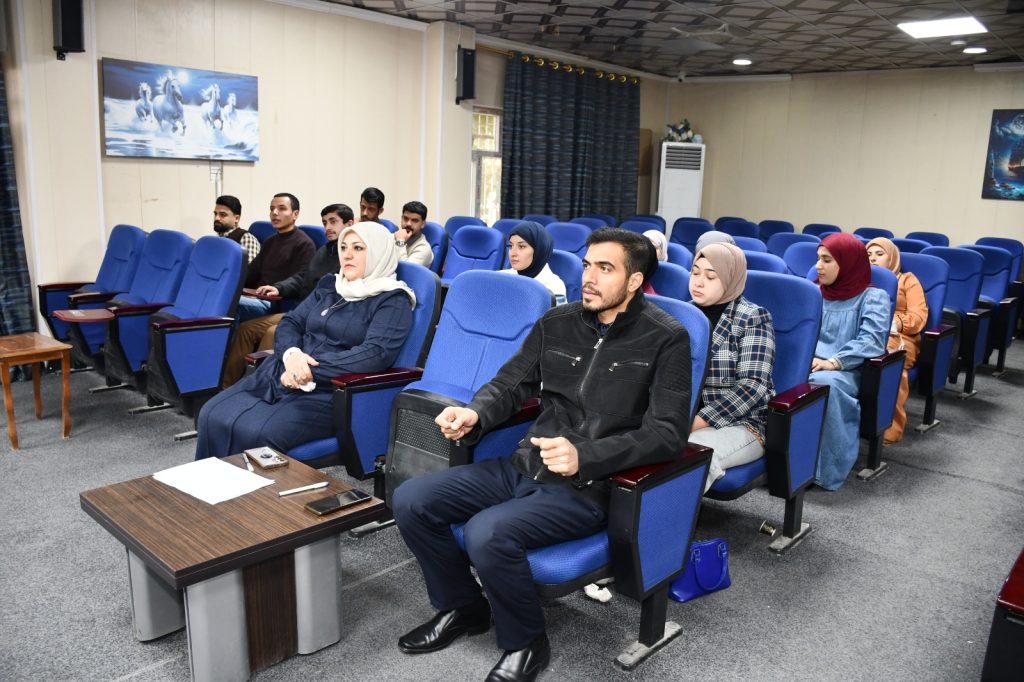
The Department of History at the College of Education for Humanities, University of Diyala, held a scientific symposium entitled “Arab Migrations to East Africa and Their Impact on Spreading Arab Culture.”
The symposium, whose topics were discussed by Dr. Walid Kamel Ibrahim Abdul, addressed the most prominent Arab migrations to East Africa, particularly those that originated from Oman during the period (75-85 AH / 694-704 CE) led by the brothers Suleiman and Said, sons of Abbad al-Julanda from the Azd tribe, following the failure of their revolt against Caliph Abd al-Malik ibn Marwan. They and their supporters sought refuge on the African coast. The symposium also discussed the migration of the Zaydis in 122 AH (739 CE) due to persecution by the Umayyads, in addition to the migrations of the Umayyads and their followers during the Abbasid era across the Red Sea and the Indian Ocean.
The lecturer explained that among the most important Arab migrations in the 4th century AH was that of the seven brothers from the Al-Harith tribe, who founded the cities of Mogadishu, Brava, and Merca, as well as the migration of the Nabahina and their sultanate in Pate during the 7th century AH. The seminar also addressed the role of Omanis in Zanzibar and East Africa in the 19th century, particularly after Sultan Sayyid Said bin Sultan moved the capital to Zanzibar in 1832 CE. He encouraged Arab migration, settlement, and land ownership, which contributed to the formation of an Arab aristocracy.
The seminar emphasized the significant civilizational, economic, and cultural role of Arabs in East Africa. They established trading centers and controlled vast areas from the eastern coast to the Great Lakes region, and they had a major influence in spreading Arab and Islamic culture before the arrival of Europeans in the region.
This seminar aligns with Sustainable Development Goal 4: Quality Education and Goal 17: Partnerships for the Goals, by promoting historical and cultural studies and the exchange of cultural knowledge among peoples.