
The College of Education for Humanities Organizes a Scientific Workshop on the City of Khanaqin, its Resources, and Their Impact on Achieving Sustainable Local Development
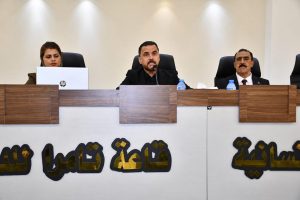
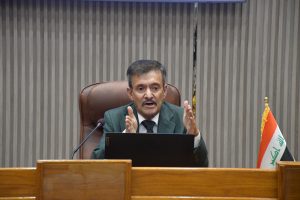
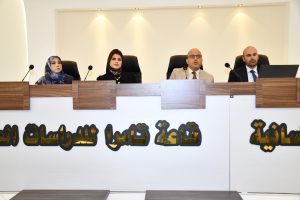
The Department of Educational and Psychological Sciences, in cooperation with the Community Service Unit at the College of Education for Humanities, University of Diyala, organized a scientific seminar in the city of Khanaqin, focusing on the unique location and resources of the city and their role in achieving sustainable local development.The workshop, presented by Assistant Lecturer Qahtan Anad Ismail, highlighted that Khanaqin is one of Iraq’s most geographically significant cities, possessing a strategic location and stunning natural beauty rich in environmental resources, making it a crucial hub for sustainable local development.The workshop aimed to emphasize the integration of geographical location and natural characteristics and their role in supporting the city’s economic, social, and environmental development. This was achieved through an analysis of Khanaqin’s strategic location and its geographical dimensions, highlighting its natural and environmental characteristics and their impact on local development, clarifying the complementary relationship between location and nature in supporting the local economy, discussing opportunities for sustainable development and ecotourism, and promoting academic and community awareness of the importance of investing in local resources. The workshop clarified that Khanaqin is one of the important Iraqi cities in Diyala Governorate, located in the eastern part of the governorate near the Iraqi-Iranian border. This gives it significant strategic importance both geographically and economically, as its location serves as a link between central Iraq and the eastern regions. Historically, this has contributed to its role as an important commercial and urban center. Khanaqin is known for its stunning natural beauty and diverse topography. The Alwand River, a vital water resource for the region, flows through it, in addition to the presence of green spaces, valleys, and extensive agricultural lands. These natural features make the city a suitable environment for agriculture and residence, and also open the door for the development of ecotourism. Historically, it is an ancient city that has witnessed the succession of multiple civilizations throughout the ages, and its strategic location has been a reason for its prosperity as a trading post on caravan routes.The workshop recommended the necessity of including Khanaqin in regional development plans, supporting ecotourism and cultural tourism, protecting and sustaining natural resources, and encouraging specialized academic research on the city. This workshop is in line with the eighth Sustainable Development Goal, which is decent work and economic growth, and which stipulates promoting sustainable economic growth and providing decent work for all.