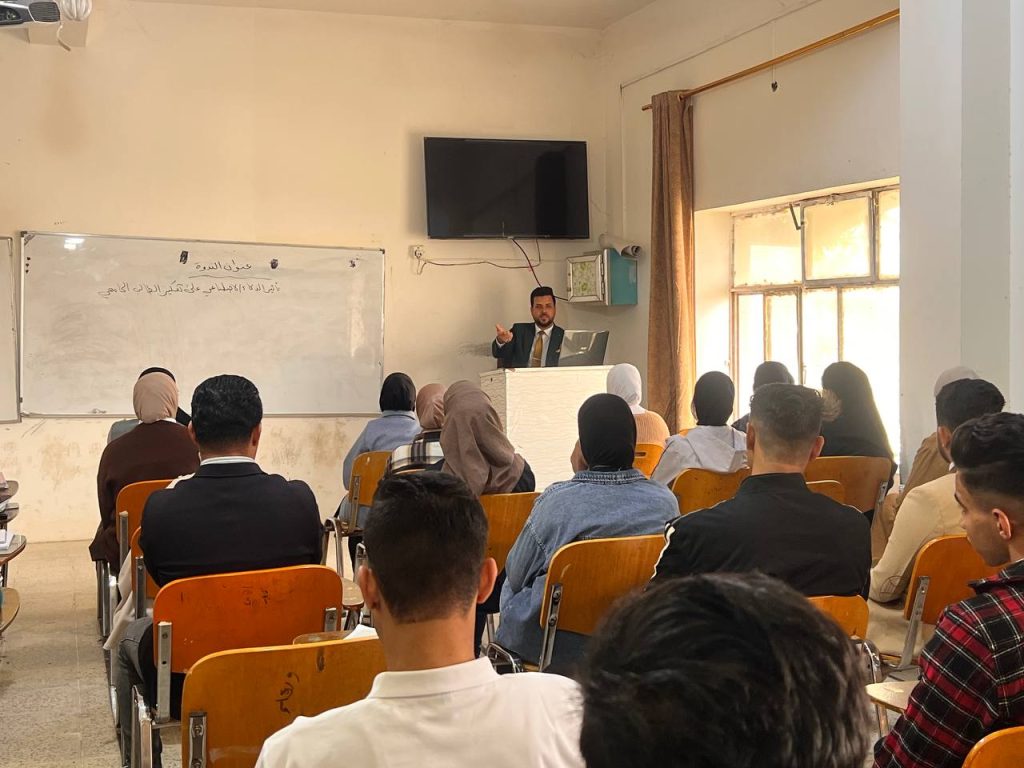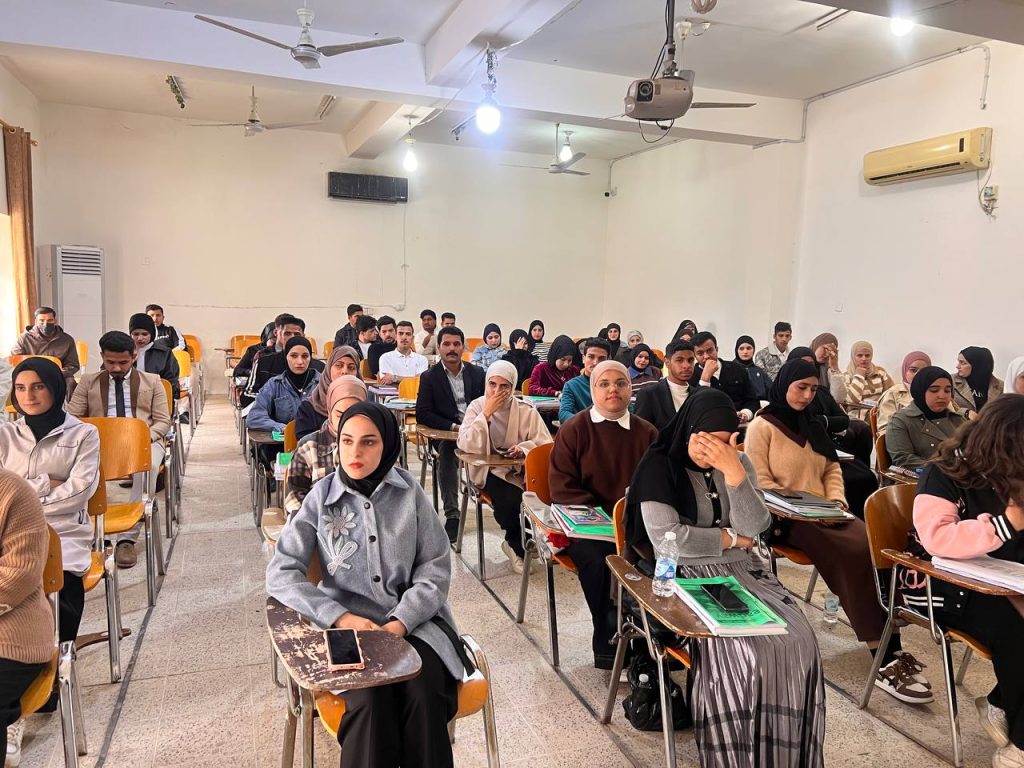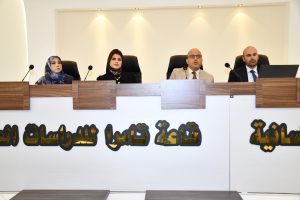

As part of Global Entrepreneurship Week, the College of Education for Humanities held a scientific seminar on artificial intelligence and its impact on university student thinking.
Under the patronage of the President of Diyala University, Professor Dr. Tahseen Hussein Mubarak, and the supervision of the Dean of the College of Education for Humanities, Professor Dr. Luay Sayhood Al-Tamimi, and as part of Global Entrepreneurship Week (Entrepreneurship and Innovation Week), and under the slogan “From the Land of the Two Rivers… Ideas Take Flight – Your Idea is Iraqi… Iraq Innovates,” the Technology Incubator and Ecosystem Unit at the College of Education for Humanities held a scientific seminar on artificial intelligence and its impact on university student thinking.The seminar, moderated by Assistant Professor Hussein Kanaan Ghaeb, highlighted the role of artificial intelligence (AI) in guiding students on how to enhance their academic capabilities and use it consciously and professionally. AI is a powerful tool for boosting thinking and learning, especially as higher education is witnessing a digital revolution driven by generative AI such as ChatGPT, DeepSeek, and other programs. These tools have become indispensable study partners for students in tasks ranging from summarizing lectures to formulating research papers and questions. Their use has exceeded 92% in some countries. However, this widespread adoption raises profound questions about its impact on students’ cognitive identity and the essence of the educational process.The seminar clarified that the real challenge lies not in preventing technology, but in preparing students to use it without compromising their ability to think independently. When AI becomes a tool for deepening understanding and opening new horizons for inquiry, it transforms from a threat into a historic opportunity to enrich the educational process. The future of education lies at the delicate balance between embracing technological innovation and preserving the core of human learning based on critical thinking and creativity. The symposium recommended using artificial intelligence as a teaching assistant to explain and clarify concepts, not to do the work for you, and to always practice critical thinking about the outputs provided by the tool, as well as the final product that reflects your own understanding and analysis.This symposium aligns with Sustainable Development Goal 17, which focuses on strengthening the means of implementation and revitalizing the global partnership for sustainable development.