College of Education for Humanities Holds Scientific Seminar on Administrative Corruption and its Impact on Spatial Disparities in Urban Development
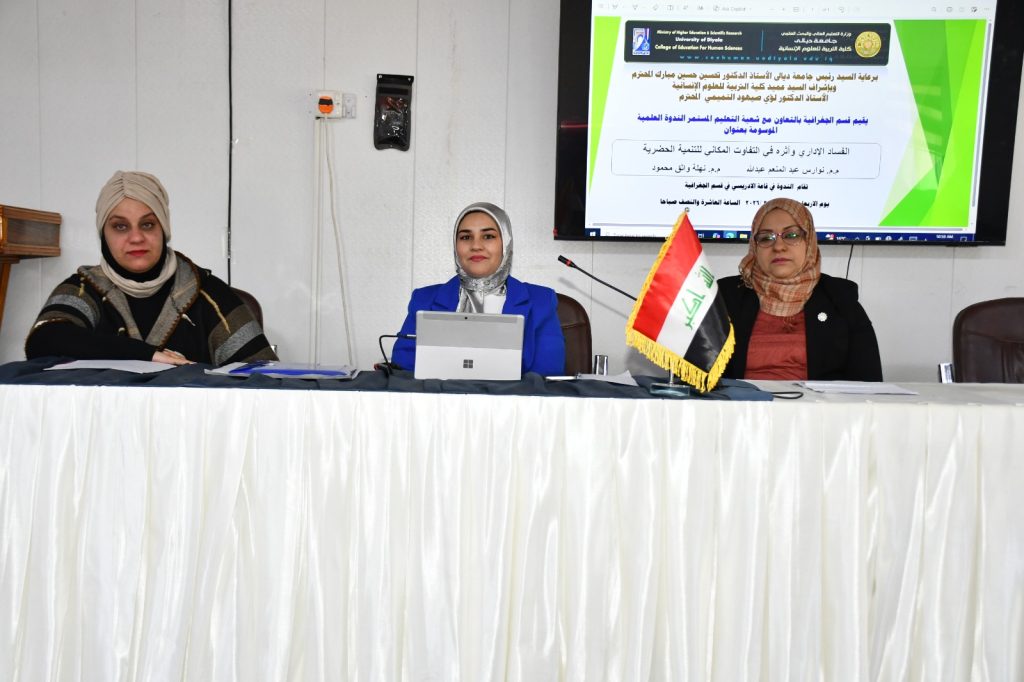
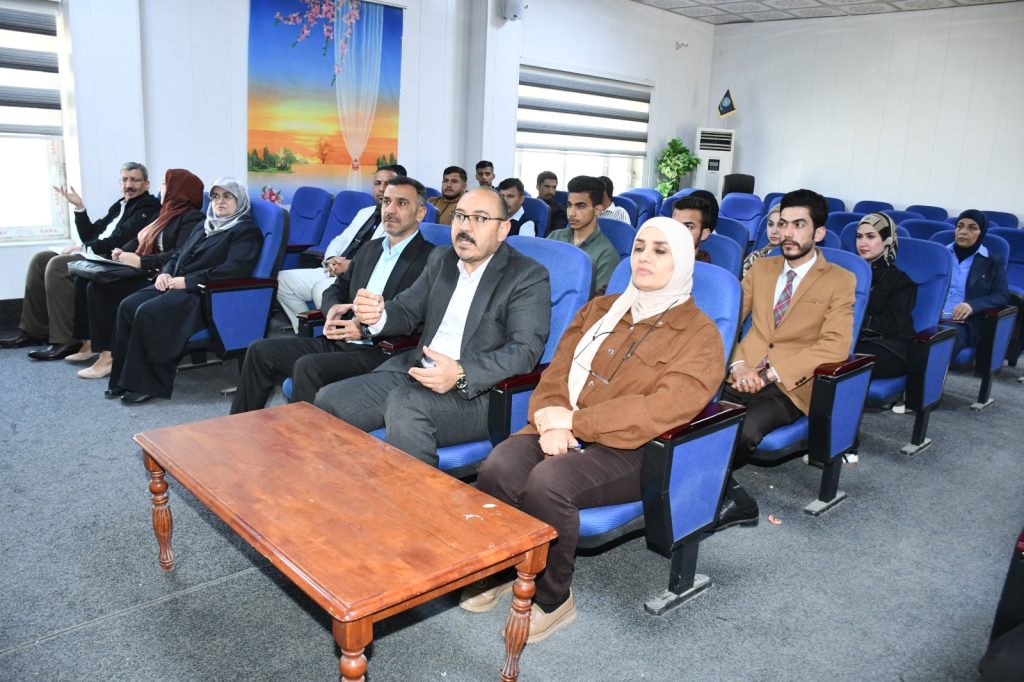
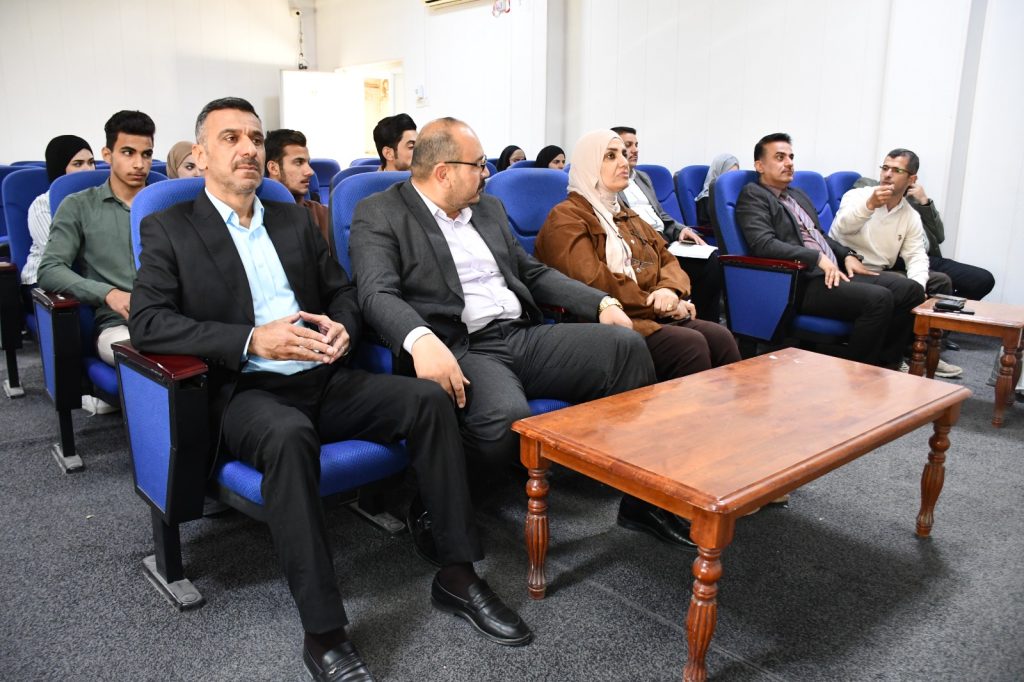
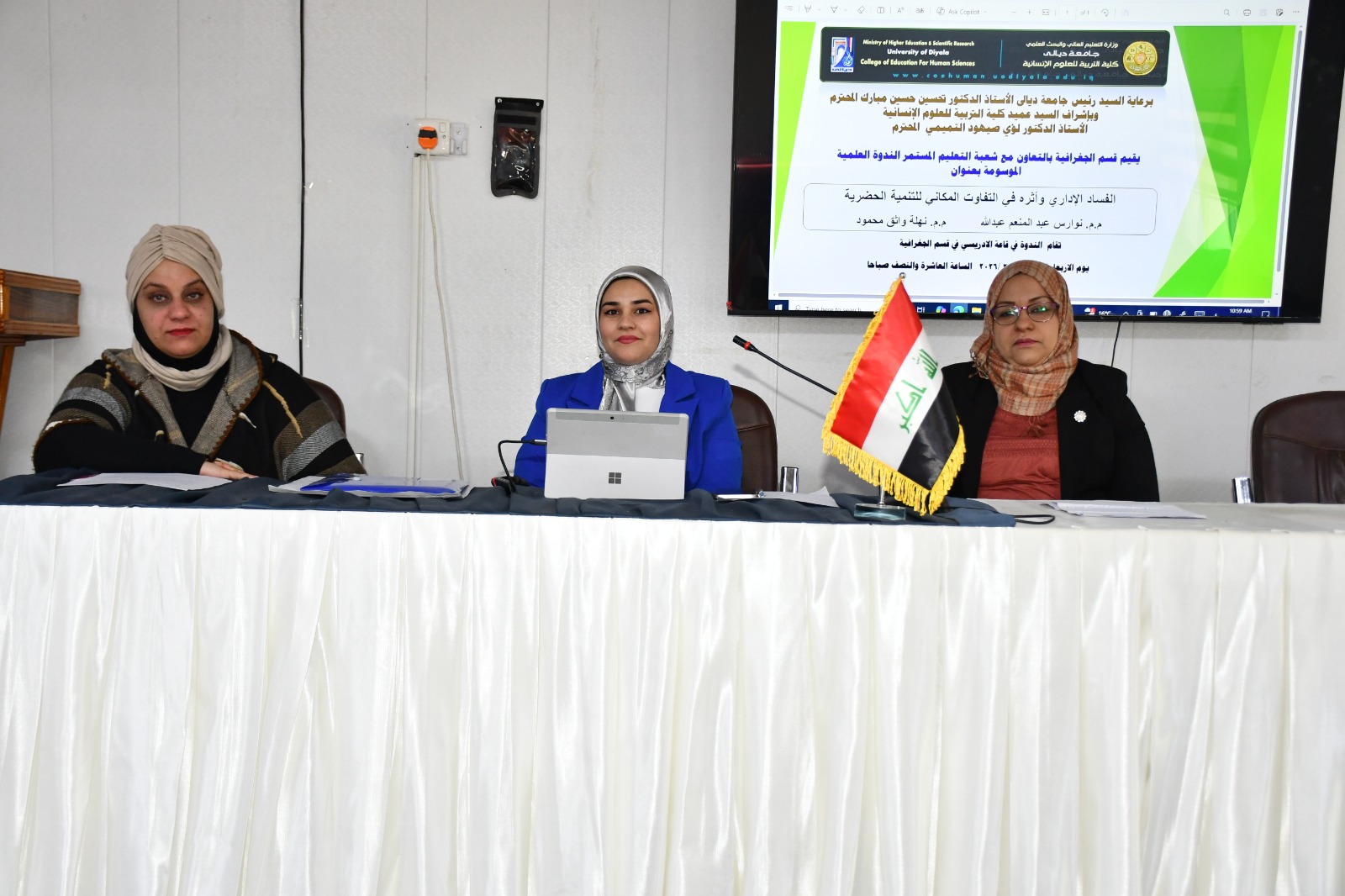
The Department of Geography, in cooperation with the Continuing Education Division at the College of Education for Humanities, University of Diyala, held a scientific seminar entitled “Administrative Corruption and its Impact on Spatial Disparities in Urban Development.” The seminar was attended by a number of faculty members, researchers, and students.The seminar, presented by Assistant Lecturers Nawras Abdul-Munim Abdullah and Nahla Wathiq Mahmoud, addressed the phenomenon of administrative corruption as one of the most prominent challenges facing urban development. This is due to its direct impact on reshaping the spatial structure of cities and creating a clear imbalance in the distribution of services and development projects. The seminar emphasized that corruption is not limited to financial and administrative aspects alone, but extends to affect urban planning and land use, leading to spatial disparities between neighborhoods in terms of infrastructure and public services.The seminar also highlighted that corruption is not limited to financial and administrative aspects, but extends to affect urban planning and land use, leading to spatial disparities between neighborhoods in terms of infrastructure and public services. The symposium highlighted the relationship between corruption and spatial justice, explaining that weak transparency and governance contribute to widening the development gap between regions, with resulting social, economic, and environmental consequences. It also adopted a spatial analysis approach to reveal patterns of geographical disparity in the distribution of projects and services, aiming to understand mechanisms for mitigating this phenomenon and promoting balanced development pathways.The symposium concluded with a number of recommendations, most notably the adoption of Geographic Information Systems (GIS) technologies for monitoring project implementation and analyzing the spatial distribution of services; strengthening the principles of transparency and disclosure in land allocation and development projects; activating institutional and community oversight mechanisms; linking urban planning to integrity and good governance indicators to ensure equitable resource distribution; and integrating the spatial dimension into performance evaluation reports for service institutions. This activity aligns with Sustainable Development Goal 16 (Peace, Justice, and Strong Institutions) and Goal 11 (Sustainable Cities and Communities), thereby reinforcing the concepts of spatial justice and sound urban development.