College of Education for Humanities Holds Scientific Seminar on Solid Waste in Al-Muqdadiyah and its Environmental Impact
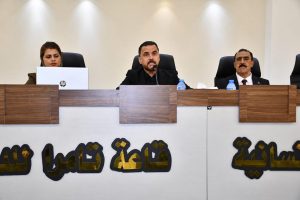
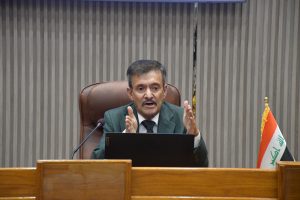
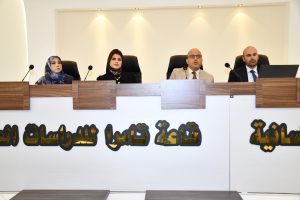
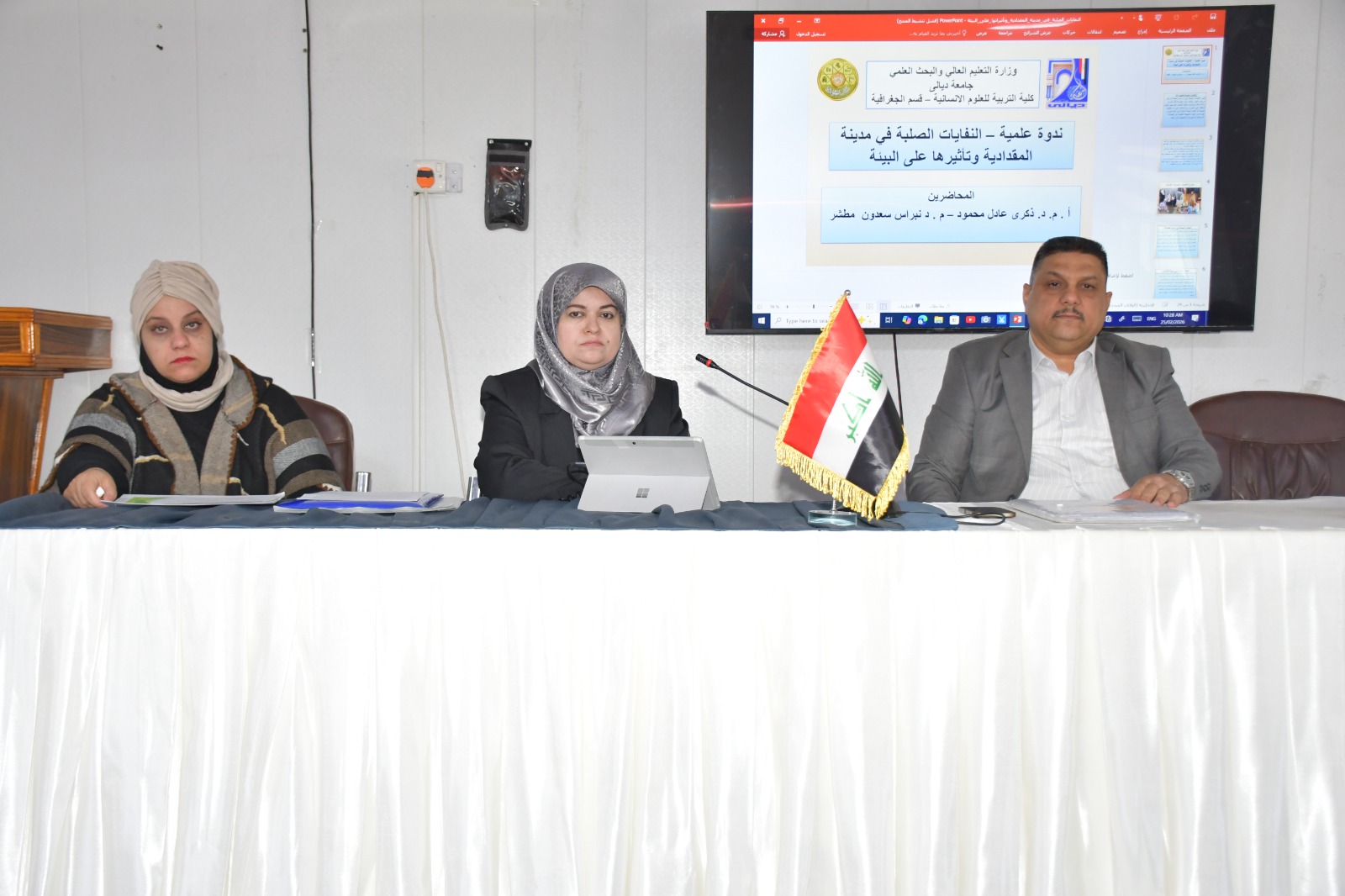
The Geography Department at the College of Education for Humanities, University of Diyala, held a scientific seminar entitled “Solid Waste in Al-Muqdadiyah and its Environmental Impact.” The seminar was presented by Assistant Professor Dr. Dhikra Adel Mahmoud and Lecturer Dr. Nibras Saadoun Mutashar, and was attended by a number of faculty members and students. This seminar was part of the college’s efforts to address environmental issues relevant to the local community.The seminar addressed the concept of solid waste as discarded or unwanted materials resulting from residential, commercial, industrial, and agricultural activities. These materials include paper, plastic, glass, food scraps, and other waste. The presenters explained that Al-Muqdadiyah is experiencing a significant increase in the amount of waste due to population growth, improved living standards, and the expansion of economic activities, which has exacerbated its environmental and health impacts.The seminar was attended by a number of faculty members and students. The symposium also highlighted the city’s main sources of waste, primarily household and commercial waste, explaining their negative impact on the environment, including air, soil, and water. It further addressed the deterioration of the city’s appearance, the emission of foul odors and toxic gases, and the spread of diseases, particularly given the lack of appropriate scientific methods for collection, transportation, and treatment.The symposium concluded with several recommendations, most notably: approaching relevant authorities to support the Al-Muqdadiyah Municipality with specialized equipment and additional personnel; implementing scientific principles of sanitary landfilling in layers covered with a suitable layer of soil; enacting legislation that obligates citizens to dispose of waste in designated areas; and learning from global experiences in waste recycling and its conversion into new industries or organic fertilizers. This activity aligns with Sustainable Development Goal 11 (Sustainable Cities and Communities) and Goal 12 (Responsible Consumption and Production), thereby promoting environmental sustainability and community service.