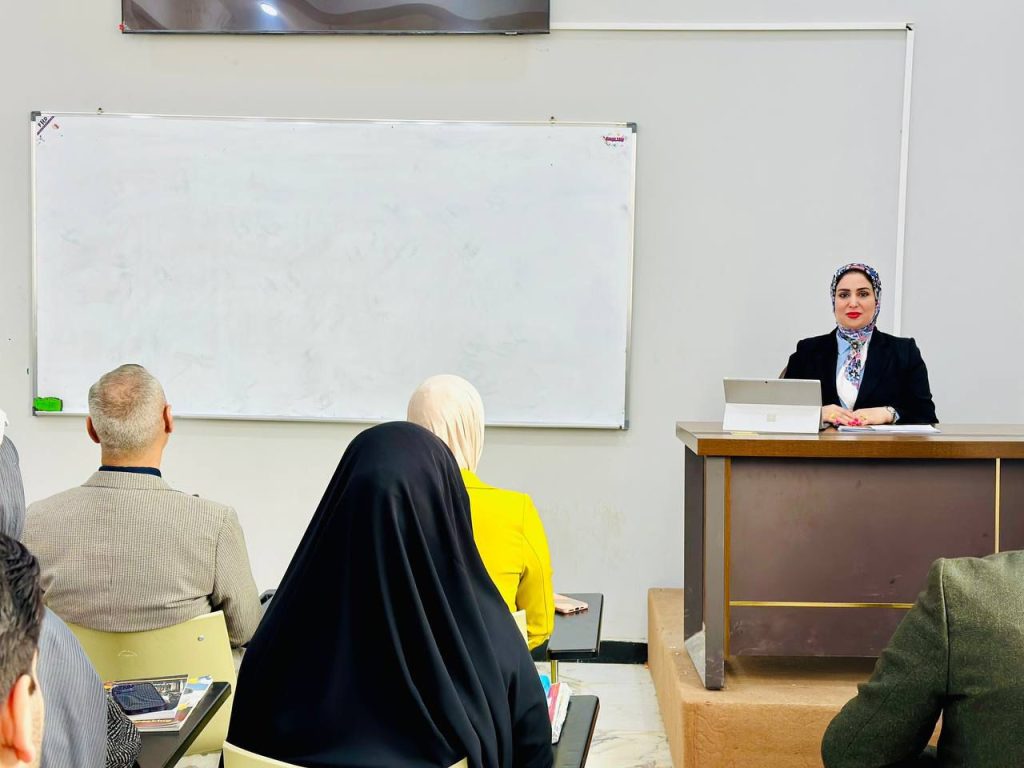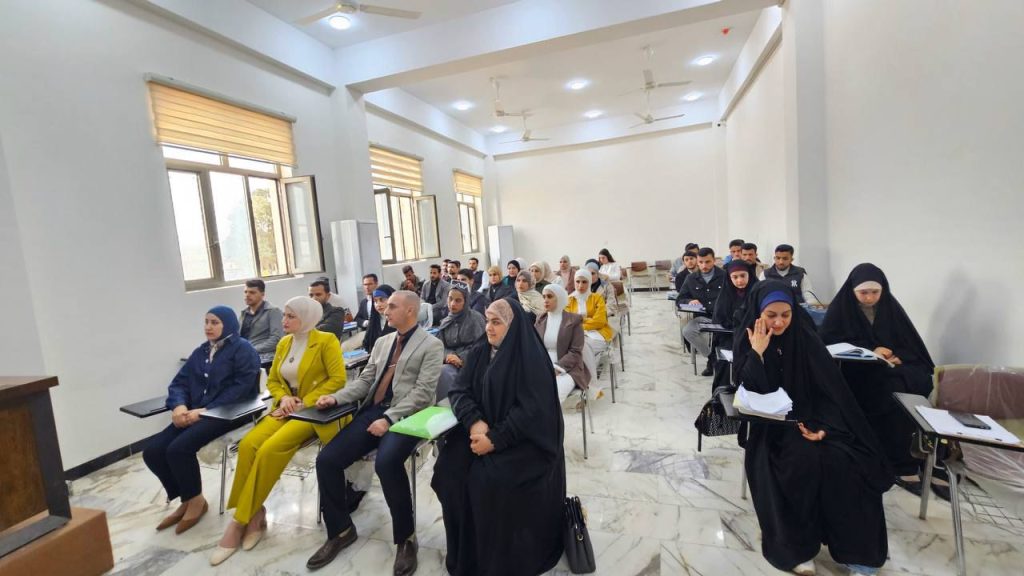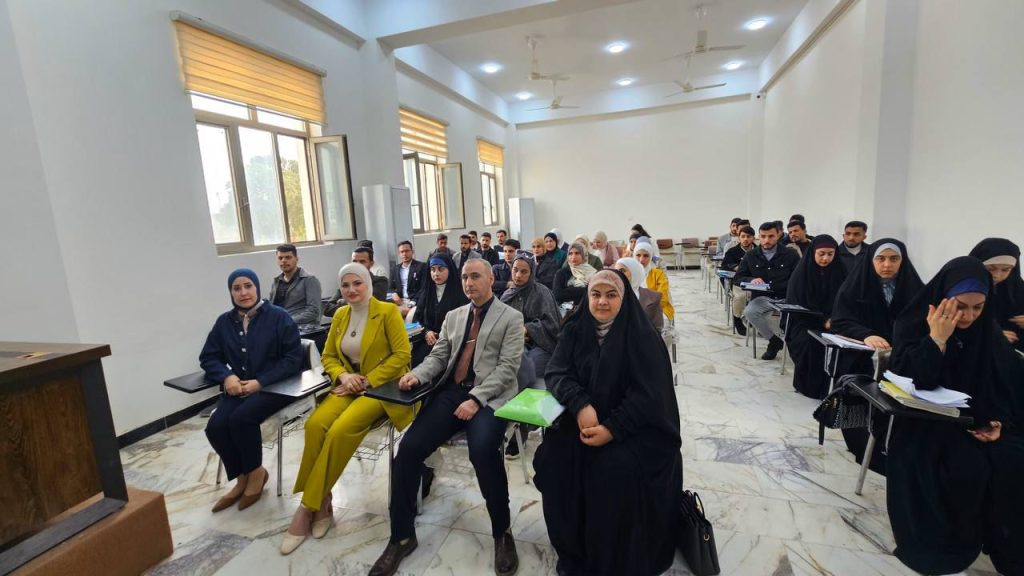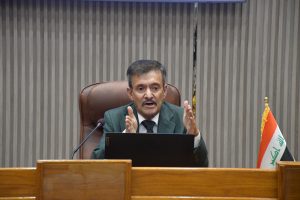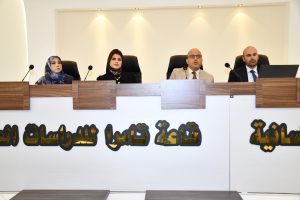
As part of Global Entrepreneurship Week, the College of Education for Human Sciences held a scientific seminar on “The Image of Humanity in the Age of Artificial Intelligence: A Reading in Modern English Literature.”
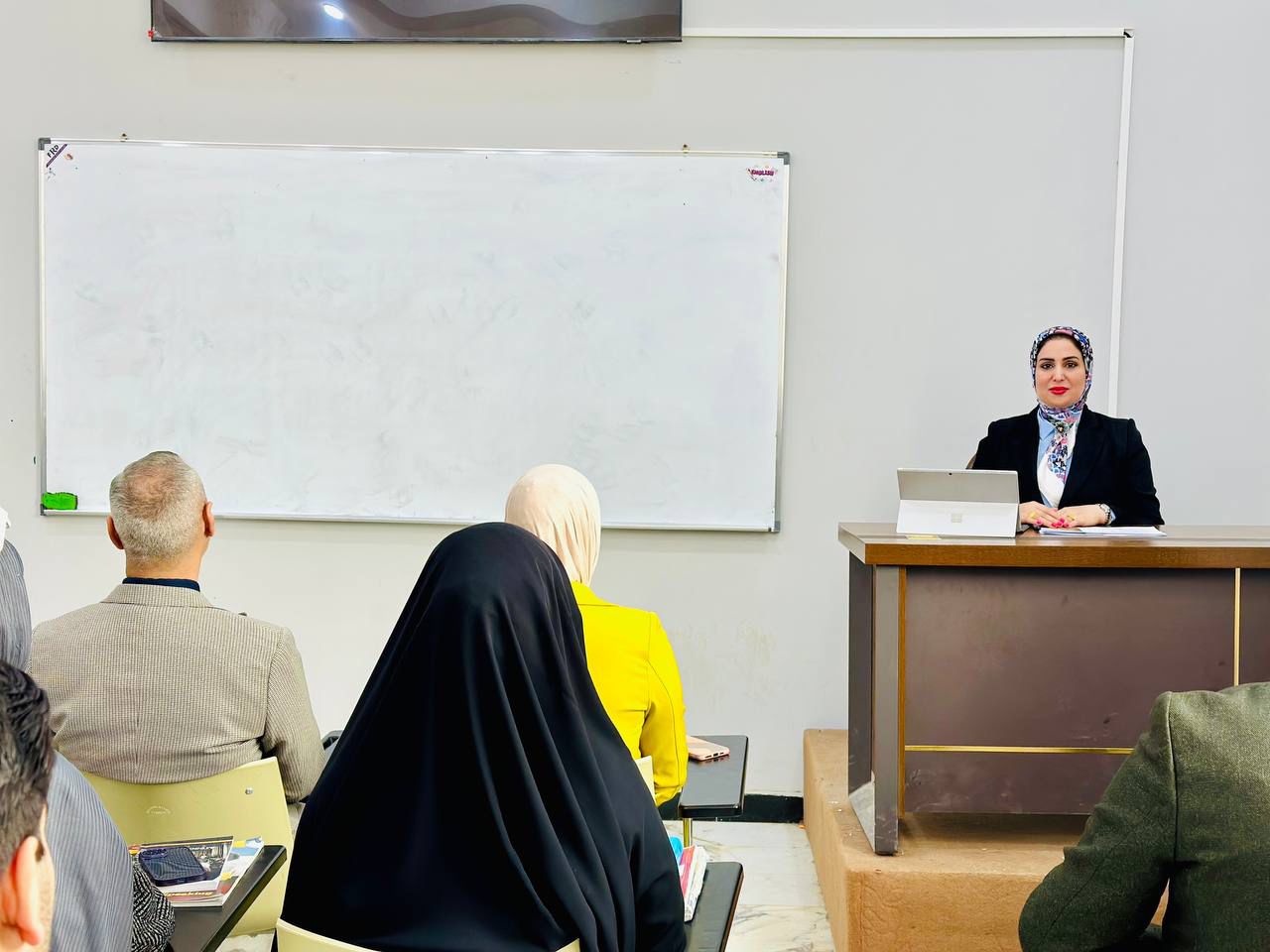
Under the patronage of the President of Diyala University, Professor Dr. Tahseen Hussein Mubarak, and the supervision of the Dean of the College of Education for Human Sciences, Professor Dr. Luay Sayhood Al-Tamimi, and as part of Global Entrepreneurship Week (Entrepreneurship and Innovation Week), under the slogan “From the Land of the Two Rivers… Ideas Take Flight – Your Idea is Iraqi… Iraq Innovates,” the College’s Technology Incubator and Ecosystem Unit held a scientific seminar on “The Image of Humanity in the Age of Artificial Intelligence: A Reading in Modern English Literature.” The seminar, presented by Assistant Lecturer Al-Yamama Qais Yousef, addressed how English literature, through science fiction and postmodern novels, anticipated the conflict between human consciousness and artificial intelligence. It also discussed how the image of the hero has shifted from the “traditional human” to the “hybrid human,” or the direct confrontation with “algorithms” that mimic emotion and thought. The seminar focused on re-evaluating The symposium explored the definition of identity and how literature reframes existential questions, as well as the dystopia of artificial intelligence. It examined examples from English literature that warned against machine dominance and the erosion of human individuality, exploring the creative interplay between humans and machines. The question was whether literature could achieve a level of human depth, or whether the “spirit of the text” would remain resistant to programming. The symposium concluded with a consensus that modern English literature serves as a mirror reflecting both humanity’s fears and aspirations. Furthermore, it emphasized that artificial intelligence is not merely a technological tool, but a “philosophical challenge” requiring writers and critics to develop new reading tools to understand the characteristics of “the human being of the future.” This symposium aligns with Sustainable Development Goal 17: Partnerships for the Goals, which calls for strengthening the means of implementation and revitalizing global partnerships.